New Iron-Based Nanomaterial Achieves Complete Breast Cancer Tumor Regression in Mouse Models
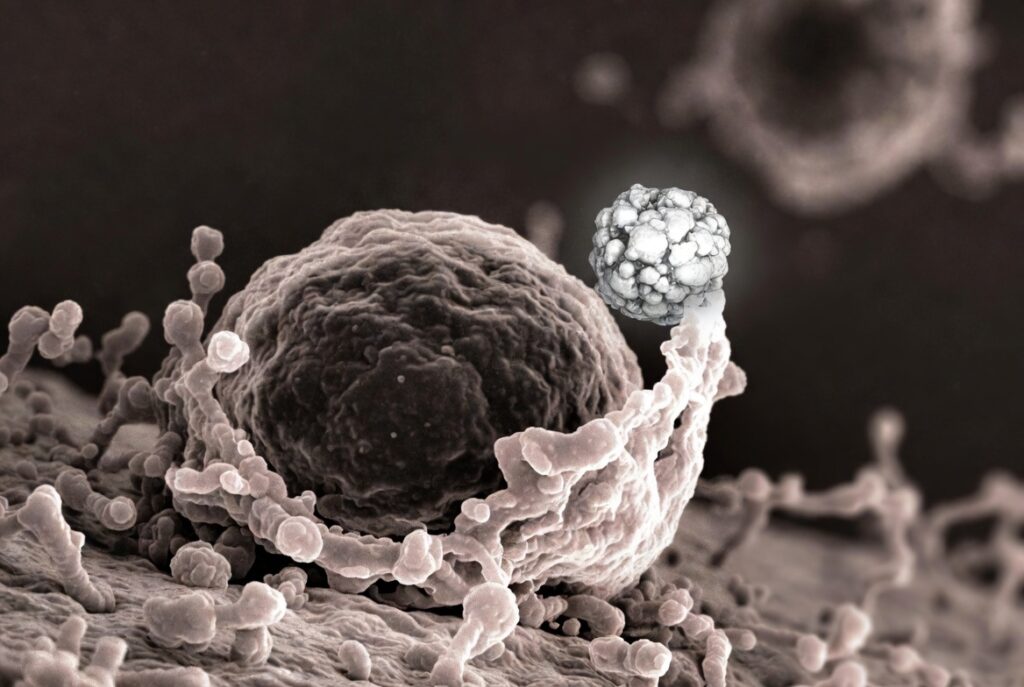
Researchers at Oregon State University have developed a promising new iron-based nanomaterial that completely eliminated breast cancer tumors in mouse models while leaving healthy tissue unharmed, according to a study published in the journal Advanced Functional Materials.
The nanomaterial, a ferrous metal-organic framework (MOF), represents an advance in chemodynamic therapy (CDT), an emerging cancer treatment approach that harnesses the unique acidic and hydrogen peroxide-rich environment inside tumors to generate toxic reactive oxygen species (ROS). Unlike traditional CDT agents, which typically produce either hydroxyl radicals or singlet oxygen but not both—and often with limited sustained activity—this new material catalyzes the production of both types of ROS simultaneously.
Hydroxyl radicals are highly reactive molecules with an unpaired electron that can damage cellular components such as lipids, proteins, and DNA. Singlet oxygen, a different form of ROS, adds to this oxidative assault. The dual action creates overwhelming stress that cancer cells cannot survive, while normal cells remain largely unaffected due to their different microenvironment.
In laboratory tests, the nanomaterial demonstrated strong toxicity against various cancer cell lines but showed minimal effects on non-cancerous cells. When administered systemically to mice carrying human breast cancer cells, the nanoparticles efficiently accumulated in the tumors, triggered robust ROS generation, and led to complete tumor regression. The treatment achieved long-term prevention of cancer recurrence with no observable systemic toxicity or adverse side effects.
“Existing CDT agents are limited. They efficiently generate either radical hydroxyls or singlet oxygen but not both, and they often lack sufficient catalytic activity to sustain robust reactive oxygen species production,” said Oleh Taratula, a researcher involved in the project. “Consequently, preclinical studies often only show partial tumor regression and not a durable therapeutic benefit.”
His colleague Olena Taratula added: “When we systemically administered our nanoagent in mice bearing human breast cancer cells, it efficiently accumulated in tumors, robustly generated reactive oxygen species and completely eradicated the cancer without adverse effects. We saw total tumor regression and long-term prevention of recurrence, all without seeing any systemic toxicity.”
The research team, from the OSU College of Pharmacy, included lead contributors Oleh Taratula, Olena Taratula, and Chao Wang, along with Kongbrailatpam Shitaljit Sharma, Yoon Tae Goo, Vladislav Grigoriev, Constanze Raitmayr, Ana Paula Mesquita Souza, and Manali Parag Phawde. The work received funding from the National Cancer Institute and the Eunice Kennedy Shriver National Institute of Child Health and Human Development, both part of the National Institutes of Health.
While the results are highly encouraging in preclinical models, the researchers emphasize that significant additional studies—including further safety assessments and human clinical trials—will be required before this approach could become a viable treatment option for patients. The findings were first reported by Oregon State University and summarized on ScienceDaily on March 1, 2026.
This development highlights ongoing progress in targeted nanotherapies that aim to improve cancer treatment precision and reduce the harsh side effects associated with conventional chemotherapy and radiation.